


30 June 2026
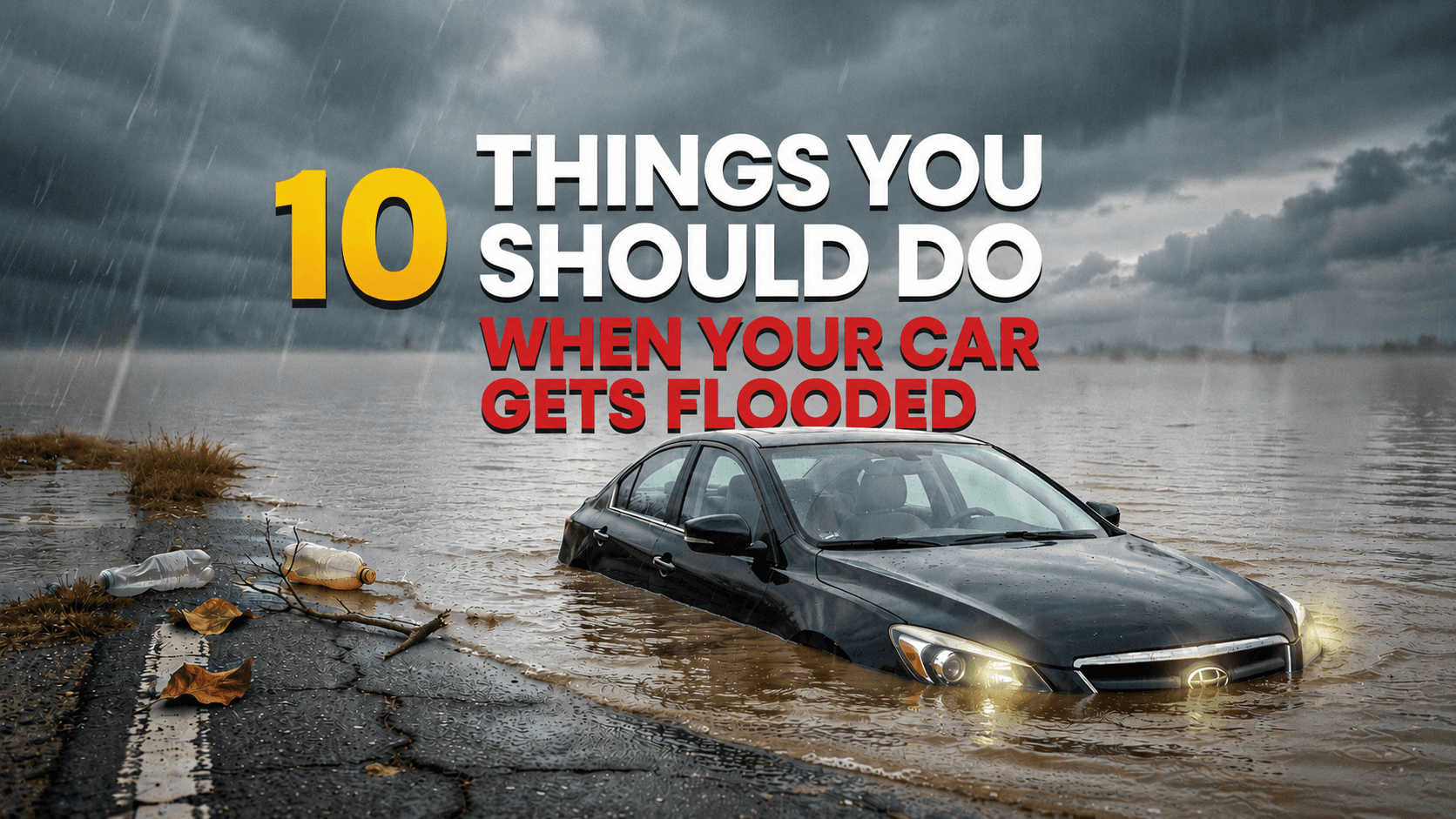
10 Things You Should Do When Your Car Gets Flooded
Most flood-damaged vehicles that are declared a total loss did not necessarily need to be. In many cases, the damage that makes a car uneconomical to repair does not occur during the flood itself, but in the hours that follow, when decisions are made without a clear understanding of their long-term consequences. Recovery depends almost entirely on speed and sequence, and knowing what to do and when to do it makes the difference between a recoverable vehicle and a total loss.
Water does not remain where it is visible. Within hours of a flood, moisture spreads into wiring looms, seat foam, acoustic insulation, and electronic components hidden behind the dashboard. A vehicle that initially appears manageable is often far more compromised internally, which is why following the correct response sequence is essential.
Also read, Car Maintenance on Monsoon- Most Practical Tips for Your Car
Things to Do When Car is Flooded
Here are some important things to remember if your car gets flooded to help reduce damage and minimize financial loss.
Avoid Starting the Engine
This is the step that causes the most irreversible damage when ignored. Turning the key feels like the obvious first move, but it is not. If water has entered the air intake, it may have reached the cylinders. When the engine fires, it attempts to compress that water. Liquids do not compress. The resulting force can bend connecting rods, fracture the engine block, and cause hydrolock. Repair costs for a hydrolock frequently exceed the market value of the car. The engine may have been perfectly fine before the key was turned. Keep the ignition off until a mechanic has physically inspected the intake and cylinders and confirmed it is safe to start.
Move the Vehicle to Higher Ground
Floodwater that has receded can return. More immediately, every hour a vehicle sits in or near standing water adds damage that does not need to happen. Moisture continues to infiltrate the undercarriage, door seals, cabin, and wiring harnesses the longer the vehicle remains in place. If the vehicle can be safely driven, move it immediately to dry, elevated ground. If not possible, arrange a tow. Leaving it where it is while waiting for conditions to improve is not a neutral decision. It is a decision that increases repair costs with each passing hour.
Disconnect the Battery
Cut power to the electrical system before doing anything else inside the vehicle. This one action prevents a significant category of secondary damage. Water inside an electrical system creates the conditions for short circuits. A short can destroy control modules, burn wiring insulation, and compromise sensors that survived the flood intact. Remove the negative terminal first, then the positive. If the battery is in an awkward position or you are not confident doing this safely, wait for a mechanic rather than risk it. The point is to cut the circuit before moisture has the chance to travel further through it.
Check How High the Water Reached
Before anything is cleaned or disturbed, identify the waterline. Look along the door panels, seat fabric, and interior trim for the mark left at the highest point reached by the water. This single measurement shapes every decision that follows. Water that stayed below the door sill is a very different situation from water that reached the dashboard level. Once water rises above the floor, the ECU, fuse box, and airbag sensors may already have been affected. If it reaches the dashboard, the vehicle is likely a total loss regardless of how it appears afterwards. Photograph the waterline before cleanup begins, as insurers will require this documentation.
Remove Standing Water Promptly
Once the waterline has been assessed, focus immediately on removing any standing water. Time is the key factor here. The longer water remains inside the cabin, the further it spreads into areas that are difficult and expensive to dry. Use a vacuum to remove water from the footwells, boot, and any pooling areas as quickly as possible. Pay close attention to areas under the seats and beneath floor mats, where water often collects unnoticed. Seat foam absorbs water and retains it for days, and sound insulation behaves in the same way. Removing visible water within the first few hours significantly reduces secondary damage to hidden components.
Dry the Interior Without Delay
Removing the water is only the first step. The interior must be dried thoroughly and quickly to prevent mould from developing. Mould can begin growing within 24 to 48 hours in a warm, enclosed space with residual moisture. Once it does, the odour is extremely difficult to remove and poses a genuine health risk to occupants. Open every door and window, pull out the floor mats, and run fans directed into the footwells. A dehumidifier inside the cabin overnight is worth the effort. In dry weather, parking with the windows down in direct sunlight helps. In humid conditions, it is not enough on its own.
Inspect Engine Fluids for Contamination
Before the engine runs again, pull every dipstick and look at what comes out. Water-contaminated fluid has a specific appearance: milky, foamy, lighter than normal, and sometimes slightly cloudy rather than clear or the expected colour. Check the engine oil, transmission fluid, and coolant. Any one of these can carry water in after a flood, and all of them stop working properly when they do. Lubrication fails, heat transfer degrades, and internal wear accelerates from the moment a contaminated engine is started. Drain and replace any fluid that shows signs of contamination before the car moves under its own power.
Test Electrical Components
Flood damage to electrical systems is unpredictable, and some of the worst failures do not show up immediately. A car that seems fine after drying can develop new faults weeks later as corrosion continues spreading through connectors. Once the battery has been reconnected, test every accessible electrical system. Check headlights, indicators, power windows, central locking, dashboard warning lights, and the infotainment system, as each provides useful information about system health. Note any behaviour that differs from before the flood, including warning lights that were not previously present. Keep a written log of any new faults that appear in the days following the incident. This record is valuable for diagnosis and for any ongoing insurance correspondence.
Notify Your Insurance Provider
Contact your insurer as soon as possible after the flood and before significant repair work begins. Most policies require prompt notification, and delayed reporting can reduce or invalidate a claim. Before any cleanup, photograph the waterline on the body and interior, the engine bay, the surrounding area, and any visible damage present at the time. Write down the date, the approximate depth of the water, and how long the vehicle was submerged or exposed. Keep receipts for every cost incurred as a result of the flood. If a loss adjuster later disputes the extent of the damage, detailed documentation taken immediately after the event is the strongest evidence available to you.
Schedule a Professional Inspection
Even if the car appears to have come through without major issues, it should undergo a full inspection by a qualified mechanic before returning to regular use. A visual check is not sufficient. A professional inspection covers the engine internals, transmission, braking system, and full electrical architecture in a way that cannot be replicated at home. Flood damage to brake components can lead to silent failure, with no warning until braking performance is severely compromised. The inspection also provides a written record of the vehicle’s condition after the flood, which is valuable documentation for insurance purposes and any future sale.
Also read, Five Questions To Ask When You Take Your Car To A Service Centre ?
Buying a Used Car : How to Spot Flood Damage ?
Buying a used car requires careful attention to flood history. A vehicle history report from a reputable provider is the starting point, as it identifies salvage and flood titles recorded with insurers and government agencies. However, such reports may not capture vehicles that were repaired before being formally assessed. A physical inspection helps address this gap. Persistent musty odours after cleaning, water staining under carpets or boot linings, rust on seat tracks or door hinges, and condensation inside headlight units can all indicate prior flood exposure, even if no record appears in the report. Ask the seller directly about the ownership history. Request maintenance records and look for gaps that coincide with periods when the car should have been serviced. Where possible, have an independent mechanic inspect the vehicle before purchase. A seller who answers questions directly and can produce verified documentation is a different proposition from one who gives vague answers and pushes for a quick decision.
Final Thoughts
Flood damage is recoverable, but only when the right steps are taken in the correct order and without delay. The vehicles that do not make it back are usually those where the owner started the engine too soon, left standing water in the cabin for too long, or skipped a professional inspection because the car seemed fine. Understanding what to do and when to do it makes the difference between a recoverable vehicle and a total loss. The same understanding applies when buying a used car. Knowing what flood damage looks like, what questions to ask, and where history reports fall short makes the difference between a good purchase and an expensive problem. At Indus Used Cars, every listed cars undergoes a comprehensive multipoint inspection with full documentation, allowing buyers in Kerala to make confident decisions with a transparent history.