


25 June 2026
Electric vs. Hybrid: Which Pre-Owned Car Is Right for You?
Choosing between a pre-owned electric vehicle (EV) and a hybrid car can be challenging, especially with both options offering impressive fuel savings and lower running costs compared to conventional petrol or diesel vehicles. While electric cars provide a cleaner, fully battery-powered driving experience, hybrids combine electric power with a fuel engine for greater flexibility. Understanding the differences between these two technologies is essential before making a purchase. In this guide, we compare pre-owned EVs and hybrid cars to help you determine which option best suits your driving habits, budget, and lifestyle.
Electric vs. Hybrid Cars
An electric car (EV) runs entirely on electricity stored in a battery pack. It has no internal combustion engine, fuel tank, or exhaust system. Instead, one or more electric motors power the car, and the battery is recharged through a home charging setup or a public charging station. Because EVs do not burn fuel, they produce zero tailpipe emissions and offer a quieter driving experience. A hybrid car combines a petrol or diesel engine with an electric motor and a smaller battery. These two power sources work together to improve fuel efficiency, reduce emissions, and lower fuel consumption.
Unlike an EV, however, a hybrid car still depends on conventional fuel. Most hybrid cars recharge their batteries automatically through regenerative braking, which captures and stores energy that would otherwise be lost when slowing down.
There is also a third option known as a plug-in hybrid electric car (PHEV). A PHEV features a larger battery than a standard hybrid and can be charged externally, just like an electric car. This allows it to travel a significant distance using electricity alone before the engine takes over. As a result, plug-in hybrids offer a balance between the fuel independence of EVs and the convenience of traditional hybrids.
Read to Know : Do Electric Cars Need Engine Oil?
Electric vs Hybrid USed Cars: Comparing Purchase, Running, and Maintenance Costs
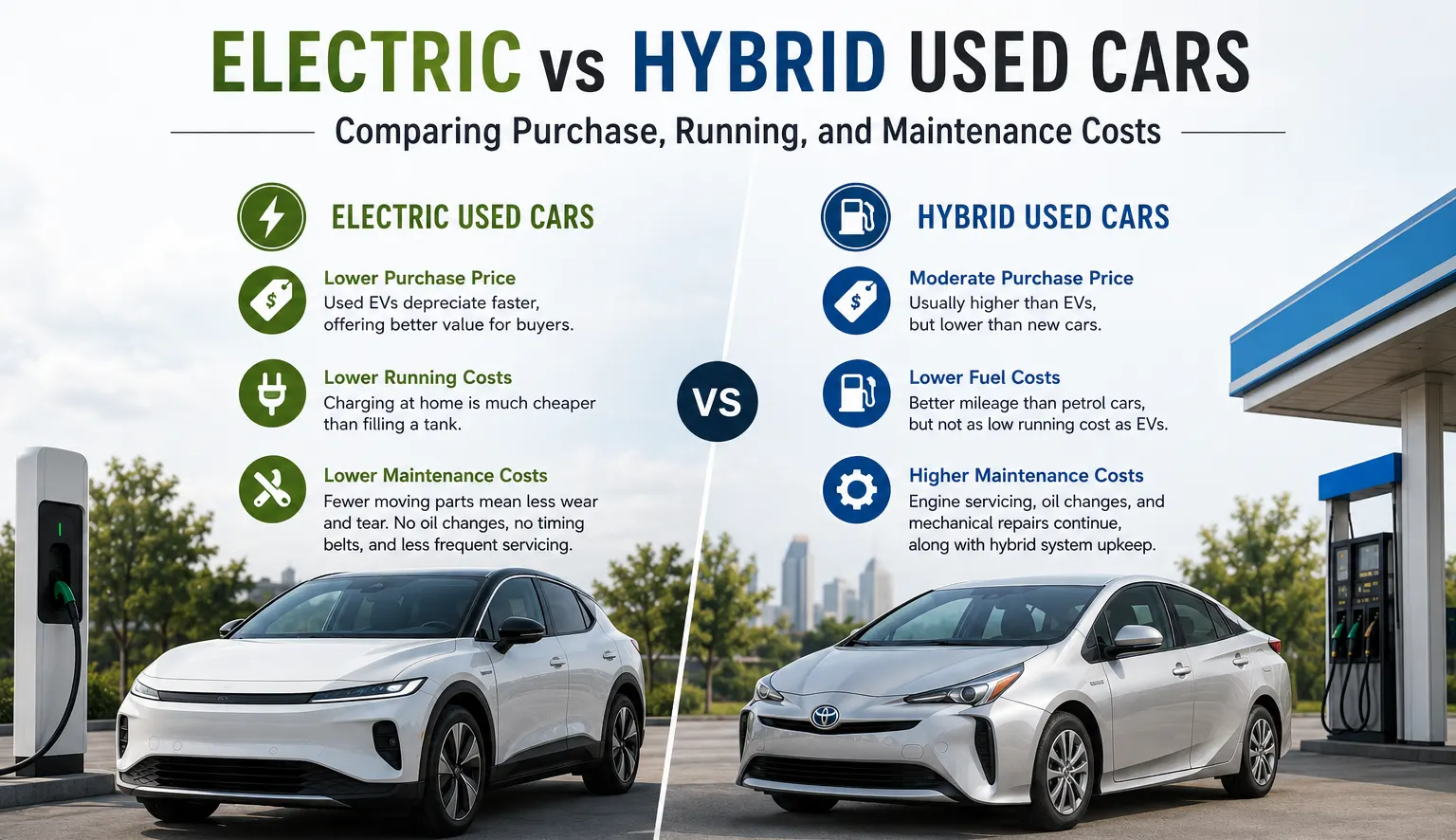
Pre-owned electric cars tend to lose a significant portion of their original value within the first few years of ownership. For a used car buyer, that depreciation curve works in your favour. A vehicle that was priced well beyond most budgets when new may now sit at a figure that competes directly with petrol alternatives. Over time, the savings on an electric vehicle are hard to ignore. Plugging in at home overnight costs a fraction of what a full tank would cost, and that gap compounds over months and years of regular use. Servicing is also far less involved than most buyers expect. Because an electric motor has so few moving parts relative to a combustion engine, there is no oil to change, no timing belt to monitor, and no exhaust system to repair. Brake pads tend to last considerably longer as well, since regenerative braking handles much of the work that friction brakes would otherwise absorb. Hybrid vehicles do deliver genuine fuel savings over a standard petrol car, but they retain all the mechanical complexity that comes with a combustion engine. That means scheduled oil changes, engine servicing, and the associated costs continue throughout ownership, alongside whatever upkeep the electric components require.
Lifestyle Fit: Range, Charging & Convenience
Electric vehicles are genuinely excellent for urban and semi-urban driving. If your daily commute falls within 80 to 150 kilometres and you can charge at home overnight or at your workplace, a pre-owned EV will serve you very well. Charging stations have improved considerably, with public fast chargers now available at malls, fuel stations, and commercial complexes. For city driving, the smooth, silent performance of an EV is difficult to replicate. The concern most buyers raise is range anxiety, particularly for long-distance or highway travel. It is a legitimate consideration. If your work involves frequent interstate travel or you drive to destinations with limited charging stations, a fully electric vehicle may require more planning than you are comfortable with. Hybrid vehicles remove this concern. Because they have a conventional fuel tank with the electric system, you can refuel at any petrol station anywhere in the country. This makes hybrids particularly practical for buyers who split their driving between cities and rural areas, or who take long road trips regularly.
Factors to Consider Before Choosing Between Electric and Hybrid Used Cars
The right car depends on how you use it. Your daily commute, parking setup, budget, and typical driving distance all point toward one option over the other. Consider these four factors before you decide.
Your Daily Driving Distance: If you consistently drive less than 100 kilometres per day and have access to charging, an electric vehicle is worth serious consideration. If your distances vary or tend to run long, a hybrid will suit you better.
Charging Access at Home: An EV without a home charging point becomes inconvenient. A dedicated parking spot where you can install a charger makes a significant difference to daily ownership. If you depend entirely on public chargers, be honest about how accessible they are from where you live and work.
Your Total Budget: Look beyond the sticker price and think about what the car will cost you over three to five years. EVs generally come out ahead on running costs. Hybrids offer more flexibility on the infrastructure side and often carry a lower entry price in the used market.
The Vehicle's Service History: A complete and verifiable service record matters for both categories. For a used electric vehicle specifically, battery condition data carries just as much weight as the mechanical history.
Government Incentives: FAME II subsidies and state-level benefits have made electric vehicles more financially accessible than they were a few years ago. Check what applies in your state before finalizing your budget, as the savings can be considerable.
Also Read, Basic Guidelines to Follow When Charging an Electric Car
Find Your Right Choice at Indus Used Cars
The right choice depends on your driving habits, budget, and access to charging infrastructure. Choose a pre-owned electric car (EV) if you mainly drive within the city, have convenient access to charging, and want to minimise long-term running costs. EVs offer zero fuel expenses, lower maintenance requirements, and a quieter driving experience, making them an excellent option for daily urban commuting. A pre-owned hybrid vehicle is a better choice if you frequently travel long distances, drive across different terrains, or are not ready to rely entirely on charging infrastructure. Hybrids combine the benefits of a petrol engine and an electric motor, delivering improved fuel efficiency, lower emissions, and greater driving flexibility without range anxiety. At Indus Used Cars, we offer a carefully selected range of certified pre-owned electric and hybrid vehicles. Every vehicle undergoes comprehensive inspections covering mechanical condition, battery health (where applicable), and service history verification. Our experienced team will help you compare models, understand ownership costs, and choose the vehicle that best suits your lifestyle.
Visit Indus Used Cars today to explore our latest inventory of quality pre-owned electric and hybrid cars and find the perfect vehicle for your journey ahead.