


30 September 2026
OBD Scanners Explained: How They Help Check a Used Car
Want to buy a pre-owned car? Well, we know that it can be very exciting. But it also comes with its own set of uncertainties. Of course, the exterior may look great. But the true test of the car lies in what lies under the hood. At Indus Used Cars, we believe in complete transparency. We believe in giving more power to buyers. OBD scanner is one of the most effective tools used today to inspect a pre-owned vehicle. Let's understand how OBD scanners work and how they can save you from costly repairs down the road.
What Is an OBD Scanner?
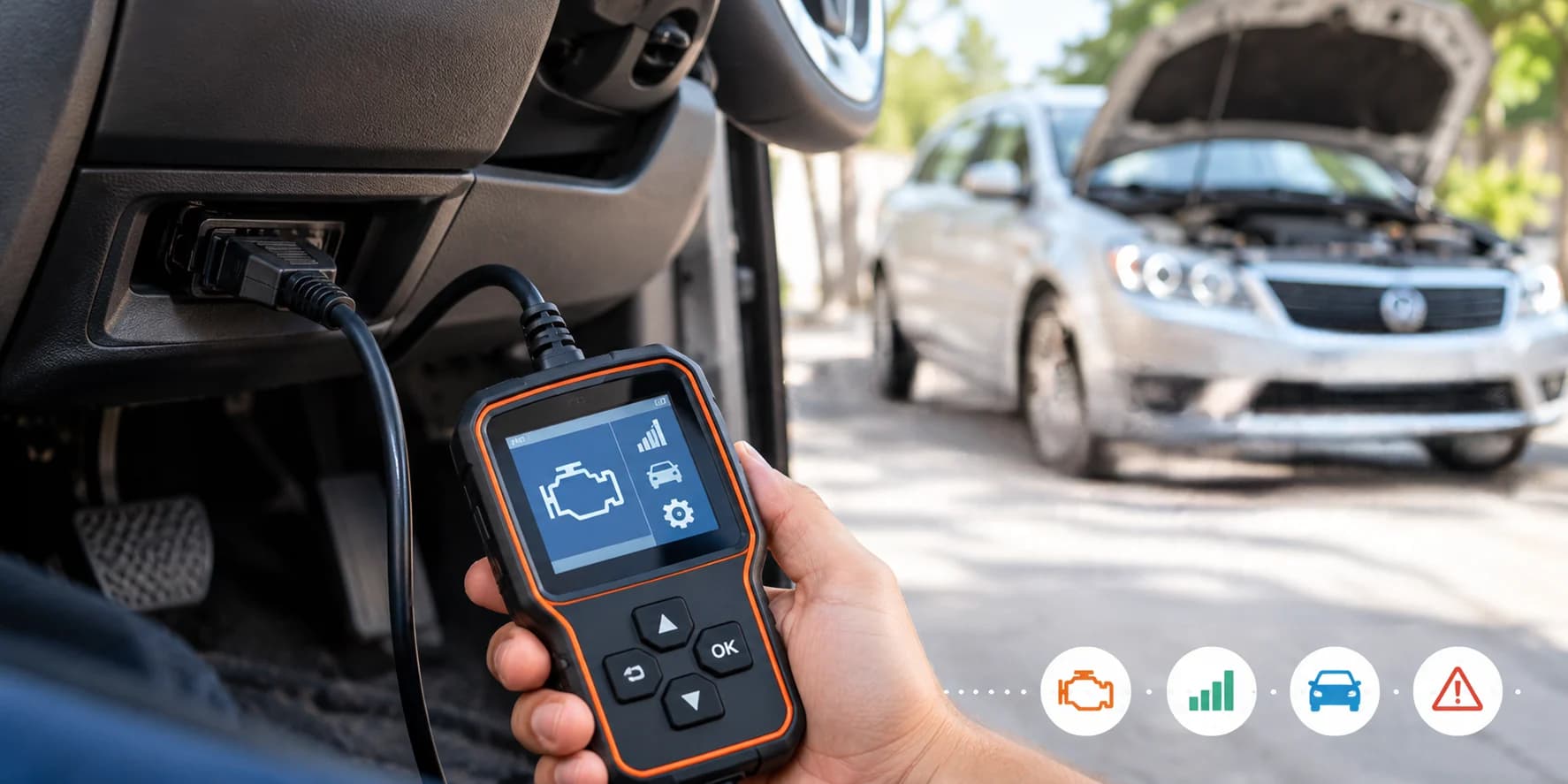
OBD stands for On-Board Diagnostics. An OBD scanner is an electronic diagnostic device. It is used to communicate with a vehicle’s computer system, known as the Engine Control Unit (ECU). Modern cars are computers on wheels. They have dozens of sensors onboard. These sensors monitor every function. These include engine temperature, fuel injection, emissions and transmission performance. When something goes wrong, the ECU logs an error code. An OBD scanner plugs into the car to read these codes. That provides you with a clear report of the vehicle's health.
How Does an OBD Scanner Work?
The OBD scanner helps you understand the information provided by the ECU of your car. Here is how it works :
Connection: The scanner is plugged into the vehicle's OBD port.
Communication: Once turned on, the scanner sends a signal requesting data from the ECU.
Data Retrieval: The ECU responds by sending real-time sensor data, system readiness statuses, and stored diagnostic error codes.
Interpretation: The scanner displays these readings on its screen. It sends them via Bluetooth/Wi-Fi to a smartphone app. This will help translate complex data into readable diagnostic codes.
What Is the OBD-II Port in a Car?
The OBD-II (On-Board Diagnostics II) port is the standardised 16-pin connector interface. It is found in almost all modern cars. The port was introduced globally in the mid-1990s. It was later standardised across India for all passenger vehicles. OBD-II helps connect a universal scanner to any car make or model. In most cars, the OBD-II port is located under the dashboard on the driver's side. It is usually found below the steering column, near the fuse box, or beneath the glove compartment.
What Information Can an OBD Scanner Read?
An OBD scanner can read a wide range of information across the different components in your car.
Engine Performance: RPM, engine coolant temperature, fuel pressure, and intake air temperature.
Emissions System Status: Performance of the catalytic converter, oxygen sensors, and evaporative emission controls.
Fuel Trim & Mileage Data: How efficiently fuel is being mixed with air during combustion.
Vehicle Speed & Transmission Diagnostics: Gear shift performance and sensor status.
Diagnostic Trouble Codes (DTCs): A history of active and pending system faults.
Understanding Diagnostic Trouble Codes (DTCs)
When an OBD2 scanner detects a fault in a vehicle, it generates a diagnostic trouble code (DTC) and may trigger the Check Engine Light on the dashboard. Understanding these codes helps identify potential issues with the engine, transmission, electrical systems, and other components.
Each OBD2 error code consists of five characters, and each character provides specific information about the detected problem.
First Character (System Category): Identifies the vehicle system where the fault has been detected.
P (Powertrain): Covers the engine, transmission, and fuel system.
B (Body): Relates to systems such as airbags, climate control, and power seats.
C (Chassis): Includes the anti-lock braking system (ABS), traction control, and steering.
U (Network): Indicates issues with onboard communication networks and wiring systems.
Second Character (Code Type): Indicates whether the error code is generic (0) or manufacturer-specific (1).
Third Character (Subsystem): Identifies the specific subsystem associated with the fault, such as fuel and air metering, ignition, or emissions control.
Fourth and Fifth Characters (Fault Identification): Pinpoint the specific issue detected within the identified system.
Knowing how to interpret OBD2 error codes can help used car buyers identify potential mechanical or electrical problems before making a purchase. However, a diagnostic code indicates a detected fault rather than confirming the exact cause, so further inspection may be necessary.
How OBD Scanners Help Inspect a Used Car?
Of course, when inspecting a used car, you take a test drive and a visual inspection. The Check Engine codes should be quite practical.
Checks Readiness Monitors: An OBD scan reveals if the system monitors have been recently reset or cleared to hide a fault.
Identifies Hidden Faults: It detects pending codes. These are previous issues that are not addressed.
Verifies Mileage & ECU Integrity: High-end scanners can verify ECU operational data. That should help you check that the vehicle’s electronics haven't been tampered with.
What Can an OBD Scan Reveal About a Used Car?
Running an OBD scan will provide you with information on several aspects of your car's health.
Engine Misfires: Issues with spark plugs, ignition coils, or fuel injectors.
Faulty Emissions Systems: Damaged oxygen sensors or a failing catalytic converter
Transmission Issues: Slipping gears, fluid pressure problems, or solenoid failures.
ABS and Safety System Warnings: Faulty wheel speed sensors or deployed/malfunctioning airbag systems.
Overheating History: Abnormally high coolant temperature logs.
Also read: 9 Common Reasons Your Check Engine Light Is On
How to Use an OBD Scanner Before Buying a Used Car?
Here is the best way to use an OBD scanner :
Locate the OBD-II Port: Find the port in your car. It is generally below the driver's side dashboard.
Plug in the Scanner: Check if the ignition switch is turned off before plugging it in.
Turn on the Ignition: Turn the key to the "ON" position. You may also need to press the Start button
Run the Diagnostic Scan: Select the option to scan for stored, pending, and permanent DTCs.
Check I/M Readiness: Ensure all emission readiness monitors show "Complete" or "Ready." If they show "Not Ready," the seller may have recently erased error codes.
Interpret the Results: Take note of any active DTCs and research their repair costs.
Limitations of OBD Scanners
Of course, OBD scanners have been known to be extremely useful. However, they do have a few limitations:
They Don't Detect Mechanical Wear: OBD scanners monitor electronic sensors. They cannot analyse mechanical failures, if any.
Code ≠ Exact Cause: A code indicates where a reading is out of range. It cannot explain the reason. For example, a lean mixture code (P0171) could mean a vacuum leak, a dirty MAF sensor, or a clogged fuel filter.
Limited Scope on Basic Scanners: The entry-level scanners usually only read Powertrain (P) codes. Many of them may miss ABS, Airbag, or Transmission issues.
Final Thoughts
An OBD scanner is one of the smartest tools. It is an important tool when shopping for a pre-owned car. It gives you complete information about the vehicle’s internal health. That should help you make an informed decision and negotiate fair pricing. At Indus Used Cars, we check every vehicle for a comprehensive multi-point issues. This includes full OBD electronic diagnostics and thorough mechanical checks. We handle the technical aspects in detail. This should help you drive your car with complete confidence and peace of mind. Looking for a reliable used car dealer near you ? Check out our certified used cars at Indus Used Cars today!