


27 September 2026
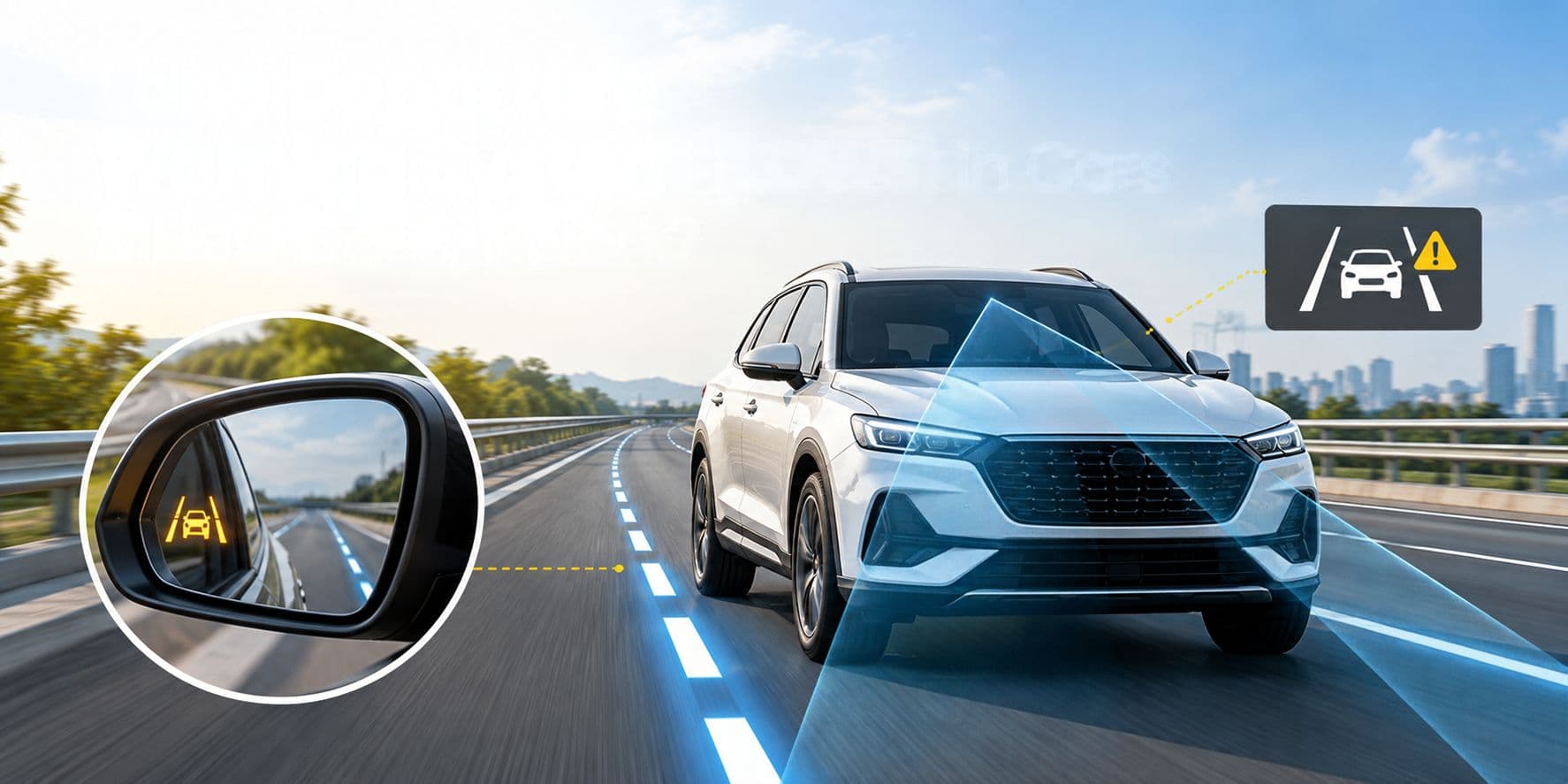
Lane Departure Warning System (LDWS) in Cars & How Does It Work?
There was a time when driver assistance technologies were limited to high-end luxury vehicles and top-tier SUVs However, today, we have been witnessing it become a standard option across all modern vehicles. Let us understand how LDWS functions, where its limitations lie, and how verifying its operation during a test drive helps pre-owned vehicle buyers make informed safety decisions.
What Is a Lane Departure Warning System?
A Lane Departure Warning system is an active safety mechanism. It is designed to alert the driver when the vehicle drifts out of the designated lane. The system uses real-time visual tracking to monitor the road geometry. If a vehicle drifts away from the visible lane marker, the system considers the movement unintentional. It can be caused by driver distraction, fatigue and temporary lack of attention. In such cases, the system issues a warning.
How Does LDWS Work?
The LDWS uses a continuous scanning of the road ahead. It scans the visible markers. Then, it analyses the position of the vehicle with respect to the markers. The LDWS consists of the following components :
Optical Camera: It is mounted behind the windshield near the rearview mirror. This camera captures high-resolution imagery of painted lane lines, dashed markers, and road edges.
Image Processing Unit (ECU): The central processing module analyses incoming video frames. It identifies line contrast and predicts the trajectory based on vehicle speed and steering angle.
Sensors & Signal Inputs: Integrated sensors monitor indicator stalk status, steering wheel angle, and vehicle velocity. This helps in differentiating intentional lane changes from accidental drift.
Alert Mechanism: These include auditory, visual, or haptic units. They help in rapid feedback to the driver.
How Does LDWS Alert the Driver?
There are several warning systems used in an LDWS device:
Visual Alerts: It is a flashing icon on the instrument cluster or a prompt on the head-up display (HUD). It indicates which side the vehicle is drifting toward.
Auditory Alerts: You also have a series of distinct chimes, beeps, or directional audio cues that sound from the side speakers
Haptic Feedback: The steering wheel or driver's seat frame vibrates gently. This provides the tactile feel of driving over rumble strips.
When Does LDWS Activate?
The LDWS may not operate continuously at every speed. In case of tight city manoeuvring, the system will not issue any alert. It only comes into action when the speed goes above a certain level. The speed limit is typically in the range of 50 km/h and 60 km/h (30–37 mph). Additionally, activating the turn signal temporarily suppresses the system. It helps in smooth, intentional lane transitions without unnecessary warnings.
LDWS vs. Lane Keeping Assist (LKA)
Are you a new driver? There is a chance that you may be confused between LDWS and LKA. LKA stands for Lane Keeping Assist system. They work in different ways.
The Key Benefits of LDWS
The LDWS system on a vehicle comes with a huge list of benefits.
Mitigates Fatigue-Related Accidents: Provides critical early warnings on long highway journeys when driver focus wanes naturally.
Encourages Disciplined Driving: Promotes regular turn signal usage before changing lanes to prevent accidents.
Enhances Overall Road Awareness: It works as a reliable second pair of eyes during night driving or tedious commutes.
Limitations of LDWS
Even when the LDWS is known to provide several advantages, it also comes with its own set of limitations.
Poor Lane Markings: Faded, worn, or absent paint lines reduce system accuracy.
Adverse Weather: Heavy rain, fog, snow, or direct glare can obstruct the windshield camera's view.
Complex Road Geometry: Construction zones, temporary road diversions, and sharp curves can cause temporary occasional false alerts.
LDWS in Used Cars: What Should Buyers Check?
When checking a pre-owned car with LDWS, it is quite important to check a few factors:
Inspect the Windshield Area: Check for cracks, chips, or aftermarket tinting near the top-centre windshield camera mount. Improperly installed replacement glass can misalign the camera.
Read to know : How to Stop a Windshield Crack From Spreading?
Perform a Road Test: Drive the vehicle on a well-marked road above 60 km/h. Intentionally approach a lane line without signalling. This will help you verify visual, audio, or haptic alerts.
Verify Calibration Status: Ask for service logs. Thus, you can confirm whether camera recalibration was completed.
Scan for Diagnostic Faults: Make sure that no ADAS warning lights remain illuminated on the dashboard cluster.
Can LDWS Be Added to a Used Car?
Yes, aftermarket LDWS kits are available. These units typically feature a dashboard-mounted camera, display unit, and OBD power connection. While aftermarket solutions provide functional lane tracking and collision alerts, factory-installed systems remain more tightly integrated with internal vehicle sensors, steering telemetry, and factory display panels.
Choosing a Second-Hand Car with a Lane Departure Warning System from Indus Used Cars
Indus Used Cars offers a wide range of pre-owned cars, along with additional features and integrations based on customer requirements. While many modern vehicles come equipped with advanced safety features such as Lane Departure Warning Systems (LDWS), their effectiveness depends on proper maintenance, accurate calibration, and the absence of diagnostic faults. Visit Indus Used Cars today to explore our extensive range of pre-owned vehicles and find one that meets your needs, preferences, and budget.